
Luxury interior design trends for 2026 reflect a fundamental shift toward authenticity, craftsmanship, and personalized living environments that prioritize quality over spectacle. After years of Instagram-driven aesthetics that prioritized visual impact over livability, the South Florida luxury market is embracing design approaches that emphasize genuine materials, skilled artisanship, wellness integration, and technology that enhances daily life without dominating it.
Palm Beach and Miami represent two of America’s most dynamic luxury design markets, each bringing distinct cultural influences, architectural traditions, and lifestyle expectations to how these trends manifest. Palm Beach’s preservation-conscious aesthetic and traditional elegance interpret trends through a lens of timeless sophistication, while Miami’s cosmopolitan energy, Art Deco heritage, and international design influences push trends toward bolder, more contemporary expressions. Understanding how these broader movements translate to each market helps homeowners make informed decisions about which trends deserve investment and which are better admired from a distance.
This guide analyzes the ten most significant luxury interior design trends shaping high-end residential projects across South Florida in 2026, providing specific cost ranges, investment analysis, market-specific guidance for both Palm Beach and Miami, and practical advice on incorporating trends thoughtfully rather than following them blindly.
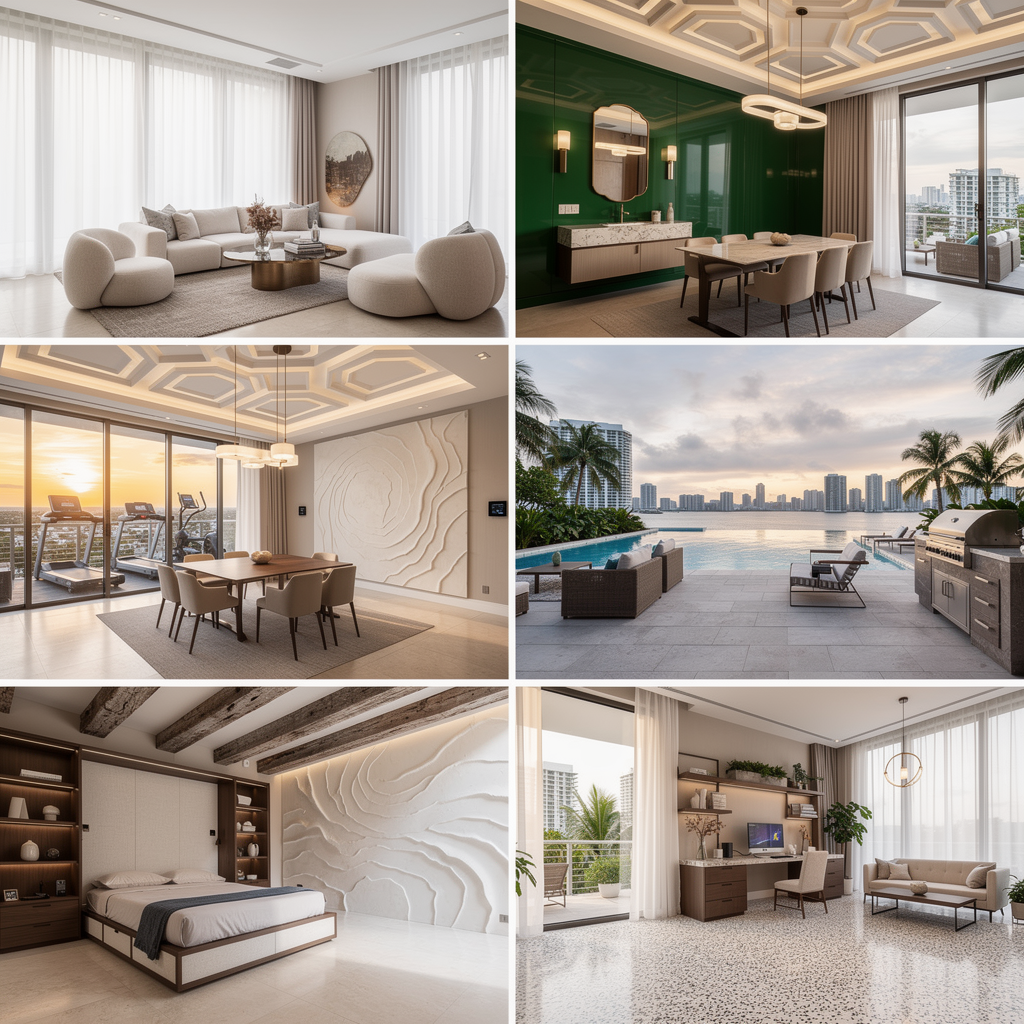
What Makes Luxury Trends Different
Before examining specific trends, understanding what separates luxury design movements from mainstream trends provides important context. Luxury trends in the Palm Beach and Miami markets share several distinguishing characteristics that set them apart from mass-market design fashions:
- Authenticity over imitation: Natural materials honestly expressed rather than synthetic reproductions or printed imitations. Authentic stone, solid wood, genuine metals, and real textiles rather than lookalike substitutes.
- Unique character over uniformity: One-of-a-kind commissioned pieces, antiques, and custom designs reflecting individual taste rather than catalog showrooms replicated across thousands of homes.
- Functionality meeting highest standards: Professional-grade appliances, smart home systems, wellness amenities, and organizational systems that genuinely improve daily life.
- Investment value: Trends in luxury markets consider resale implications. Choices balance personal enjoyment with market appeal and value retention.
- Subtlety over spectacle: True luxury whispers rather than shouts. Quality reveals itself through craftsmanship details, material authenticity, and thoughtful design rather than obvious ostentation.
Trend #1: Organic Modern — Refined Minimalism with Soul
The evolution from stark, cold minimalism to warm, organic modern represents the most significant shift in contemporary luxury design. This aesthetic combines clean lines and uncluttered spaces with natural materials, textural richness, and livable warmth that feels particularly appropriate for South Florida’s indoor-outdoor lifestyle.
What Defines Organic Modern
- Natural materials honestly expressed: Travertine, limestone, wood with visible grain, plaster walls with subtle texture, wool, linen, jute. Materials appear as themselves, not imitations.
- Neutral palette with depth: Creams, taupes, warm grays, earthy browns create serene backgrounds. But unlike stark white minimalism, colors have warmth and variation.
- Sculptural furniture: Pieces with organic curves, irregular edges, handcrafted quality. Think live-edge dining tables, rounded sofas, asymmetrical forms.
- Textural layering: Every surface has tactile interest. Bouclé upholstery, ribbed wood panels, hand-troweled plaster, woven accessories, hammered metals.
- Light as design element: Large windows, abundant natural light, views of tropical landscaping, and seamless indoor-outdoor flow.
Cost to Implement
Organic modern materials carry a 25 to 40 percent premium over conventional contemporary selections. Key budget items include natural stone surfaces at $50 to $200 per square foot installed, hand-plastered walls at $15 to $35 per square foot, quality organic modern furniture ranging from $5,000 to $25,000 per piece for investment pieces, and textural window treatments at $500 to $2,000 per window. A comprehensive organic modern transformation of a 3,000 square foot living area typically runs $150,000 to $400,000 including furnishings.
Palm Beach vs. Miami Application
In Palm Beach, organic modern integrates beautifully with Mediterranean Revival architecture, where plaster textures and natural stone echo original construction materials. The warm neutral palette complements historic interiors without competing. In Miami, organic modern takes on a more contemporary edge in the sleek high-rise condominiums of Brickell, Coconut Grove, and Miami Beach, where floor-to-ceiling windows and waterfront views become the primary design element, and organic materials provide grounding warmth against glass and concrete architecture. Coral Gables homes blend organic modern with the neighborhood’s Mediterranean character, similar to Palm Beach applications.
Investment outlook: Organic modern represents a lasting aesthetic direction rather than a passing fad. The emphasis on quality natural materials and timeless proportions ensures spaces remain relevant for 10 to 15 years with minimal updating. ROI recovery estimate: 60 to 75 percent at resale.
Implementation Strategy
For homeowners considering an organic modern transformation, the most effective approach begins with foundational elements that define the aesthetic. Start with wall and floor surfaces because plaster walls, natural stone flooring, and wood ceiling treatments establish the tactile, warm environment that organic modern demands. These foundational investments have the longest lifespan and the greatest visual impact. Layer furniture and textiles next, selecting pieces that combine sculptural beauty with genuine comfort. Avoid purchasing an entire room at once. Instead, curate pieces over time, mixing new artisan furniture with vintage finds that add the lived-in authenticity organic modern celebrates.
Lighting plays a critical role in organic modern spaces. Sculptural pendant fixtures, concealed LED cove lighting, and abundant natural light create the warm, layered illumination the style requires. Budget $15,000 to $50,000 for comprehensive lighting design in primary living areas, including both fixtures and architectural lighting infrastructure.
Trend #2: Bold Color Resurgence — Jewel Tones and Saturated Hues
After a decade dominated by neutral palettes, luxury interiors are embracing rich, saturated color with newfound confidence. Jewel tones including emerald green, sapphire blue, deep ruby, and amethyst purple are appearing in lacquered walls, upholstered furniture, dramatic powder rooms, and statement millwork throughout South Florida’s most prestigious homes.
How Luxury Executes Bold Color
The distinction between luxury bold color and mainstream color trends lies in execution quality and restraint. Rather than painting entire homes in trendy colors, luxury applications use bold color strategically:
- Lacquered accent walls and rooms: $25 to $60 per square foot for high-gloss lacquered walls requiring multiple coats and professional application. The depth and luminosity of properly lacquered surfaces cannot be achieved with standard paint.
- Jewel-toned rooms: Statement libraries, dramatic powder rooms, intimate dining rooms in deep saturated hues creating mood and sophistication.
- Custom millwork in color: $400 to $1,200 per linear foot for painted or stained custom cabinetry, built-ins, and architectural millwork in rich colors.
- Upholstered furniture: $3,000 to $15,000 per piece for sofas, chairs, or ottomans in saturated velvet, silk, or performance fabrics providing color without permanent commitment.
Palm Beach vs. Miami Application
Bold color has deep roots in Palm Beach tradition. The Palm Beach Regency style, pioneered by designers like Dorothy Draper, established jewel tones as hallmarks of sophisticated tropical interiors. Today’s Palm Beach homeowners embrace emerald libraries, sapphire dining rooms, and lacquered coral powder rooms with historical confidence. In Miami, bold color takes more contemporary forms. The Design District and Wynwood arts influence drives experimental color combinations, while Miami Beach Art Deco properties use bold color to celebrate architectural heritage. Coral Gables and Coconut Grove homes use saturated botanical greens and ocean blues that reference their lush tropical settings.
Investment outlook: Bold color executed in limited, high-impact areas offers excellent value because powder rooms, libraries, and accent walls can be repainted if preferences change. Avoid bold color in large permanent installations like tile or stone. ROI recovery estimate: 50 to 65 percent at resale, higher for classic jewel tones, lower for trendy or unusual color choices.
Implementation Tips for Bold Color
The most effective bold color applications share common characteristics. First, choose colors with historical precedent because emerald green, navy blue, deep burgundy, and rich coral have maintained their appeal across decades and design movements, providing confidence that your investment will age well. Second, commit fully within the chosen space. A lacquered library or jewel-toned powder room succeeds because the color envelops the room completely, creating an intentional experience. Tentative half-measures, such as a single accent wall in an otherwise neutral room, often read as indecisive rather than sophisticated. Third, invest in application quality. The difference between a $50-per-gallon lacquer professionally applied in six coats and a standard paint job is immediately visible and dramatically affects the perceived luxury of the space.
Trend #3: Statement Ceilings — The Fifth Wall
Ceilings are receiving unprecedented design attention in 2026, transforming from plain white surfaces into architectural features that define rooms and create dramatic impact. The trend reflects growing appreciation for overhead design elements that add dimension, character, and visual interest to luxury interiors.
Ceiling Treatment Options and Costs
| Treatment | Cost per Sq Ft | Best Application | Impact Level |
| Coffered Ceilings | $18 – $85 | Dining rooms, libraries | High – Architectural |
| Wood Beam Ceilings | $15 – $60 | Great rooms, kitchens | High – Warm/Natural |
| Painted/Muraled | $20 – $100+ | Entry foyers, powder rooms | Very High – Artistic |
| Wallpapered Ceilings | $12 – $45 | Bedrooms, sitting rooms | Medium – Decorative |
| Architectural Plaster | $15 – $40 | Living rooms, master suites | Medium-High – Textural |
| Metal/Tin Ceiling | $10 – $35 | Kitchens, bars, studies | Medium – Character |
Palm Beach vs. Miami Application
Palm Beach’s traditional architecture naturally accommodates elaborate ceiling treatments. Coffered ceilings in formal dining rooms, beamed ceilings in Mediterranean-style great rooms, and decorative plaster in entry foyers complement existing architectural vocabularies. Historic estates often feature original ceiling details worth restoring rather than covering.
Miami’s modern architecture presents different opportunities. Clean-lined tray ceilings with integrated lighting work in contemporary Brickell and South Beach condominiums, while Coral Gables homes support more traditional coffered and beamed treatments. Miami Beach Art Deco properties offer unique opportunities for period-appropriate decorative ceiling restoration. High-rise residences with standard ceiling heights benefit from subtle treatments like architectural plaster or tone-on-tone wallcovering rather than deep coffered designs that reduce perceived height.
Budget $5,000 to $25,000 per room for statement ceiling treatments depending on complexity, size, and material selections. The most impactful rooms for ceiling investment include dining rooms, primary bedrooms, entry foyers, and home offices where occupants spend significant time and appreciate overhead design elements.
Trend #4: Dedicated Wellness Spaces
The integration of health and wellness amenities into luxury homes has evolved from a pandemic-era trend into a permanent expectation among high-net-worth homeowners in both Palm Beach and Miami. Dedicated wellness spaces now rank among the top three most-requested features in luxury residential projects throughout South Florida.
Wellness Space Categories and Investment Ranges
- Home Gyms and Fitness Studios: $15,000 to $75,000 depending on size, equipment quality, flooring (rubber, cork, or hardwood), mirrors, ventilation, and technology integration. High-end equipment from Technogym, Peloton commercial, or Matrix adds $5,000 to $50,000.
- Saunas and Steam Rooms: $8,000 to $50,000 for infrared or traditional sauna installations. Steam rooms: $15,000 to $40,000 including waterproofing, ventilation, and custom tile. Cold plunge pools: $5,000 to $25,000.
- Yoga and Meditation Studios: $10,000 to $30,000 for dedicated spaces with appropriate flooring (cork, bamboo), sound systems, lighting controls, and ventilation. Minimal equipment needs make these spaces relatively affordable.
- Complete Spa Amenities: $50,000 to $250,000 for comprehensive spa suites including treatment rooms, soaking tubs, specialty showers (rain, steam, body spray), heated floors, and relaxation lounges.
Palm Beach vs. Miami Application
Palm Beach wellness spaces tend toward elegant, spa-inspired environments integrated within existing estate floor plans. Converting former staff quarters, pool houses, or underutilized wings into comprehensive wellness suites is common. The emphasis is on privacy, tranquility, and resort-quality finishes that complement the property’s architectural character.
Miami wellness spaces reflect the city’s fitness-forward culture with more performance-oriented design. Floor-to-ceiling glass overlooking Biscayne Bay or the ocean, commercial-grade equipment selections, and studio-quality fitness spaces dominate. Miami Beach and Key Biscayne properties integrate indoor-outdoor wellness seamlessly, with covered outdoor yoga platforms, poolside cold plunge installations, and alfresco treatment areas that leverage South Florida’s year-round tropical climate. Brickell and Downtown high-rise residences often convert secondary bedrooms into compact but sophisticated home gyms and wellness retreats.
Investment outlook: Wellness spaces provide strong resale appeal as buyer expectations continue evolving. Well-executed home gyms and spa amenities recover 50 to 65 percent of costs at resale while providing significant lifestyle value during ownership. The key is professional design that creates genuine wellness experiences rather than equipment-stuffed spare bedrooms.
Trend #5: Smart Home Integration — Invisible Technology
The luxury smart home trend for 2026 emphasizes invisible, intuitive technology integration rather than visible gadgets and screens. The goal is seamless automation that anticipates needs, responds to preferences, and enhances daily life without requiring technical knowledge or disrupting interior aesthetics.
What Invisible Technology Means
- Concealed audio systems: Hidden speakers behind walls, recessed into ceilings, or concealed within custom furniture deliver exceptional audio without visible equipment.
- Hidden displays: Motorized televisions that disappear into custom millwork, furniture, or ceiling cavities when not in use, preserving living spaces as designed.
- Architectural controls: Keypads, touch panels, and switches designed to match interior architecture rather than looking like technology products. Period-appropriate switch plates with smart functionality.
- Automated environmental systems: Lighting, climate, shades, and security respond to time of day, occupancy, and personal preferences without manual intervention.
- Voice-first interfaces: All smart commands available through natural voice interaction, eliminating the need for visible control panels or phone applications.
Investment Tiers
- Foundation Level: $15,000 to $50,000 covering lighting control, motorized shades, distributed audio, and basic climate automation for key living areas.
- Comprehensive Level: $50,000 to $150,000 adding whole-home audio and video distribution, comprehensive lighting scenes, security integration, and motorized window treatments throughout.
- Ultra-Premium Level: $150,000 to $300,000+ incorporating hidden displays, motorized architectural elements, commercial-grade networking, dedicated theater systems, and custom programming for complex automation sequences.
Palm Beach vs. Miami Application
Palm Beach’s historic and traditional homes require particularly thoughtful technology integration. Wireless protocols minimize physical alterations to protected structures. Period-appropriate switch plates and keypads maintain architectural consistency. Hidden infrastructure routes through existing wall cavities and service corridors. The emphasis is on technology that serves without being seen.
Miami’s modern architecture and new construction provide more integration opportunities. Pre-wired infrastructure in new Brickell towers, dedicated technology closets in contemporary homes, and clean-lined architecture that naturally accommodates recessed screens and flush-mount controls make comprehensive smart home installation more straightforward. Miami Beach renovation projects and Coral Gables historic properties present integration challenges more similar to Palm Beach, requiring creative concealment within existing construction.
Investment outlook: Smart home infrastructure represents one of the strongest long-term investments among current trends. Technology continuously improves, and homes with robust infrastructure accommodate upgrades easily. ROI recovery estimate: 50 to 60 percent at resale, with the infrastructure investment providing ongoing lifestyle value that justifies the premium regardless of direct financial return.
Avoiding Smart Home Mistakes
The most common smart home mistake in luxury properties is investing in visible technology that becomes dated rather than infrastructure that accommodates future innovation. Avoid proprietary systems locked to single manufacturers because technology companies rise and fall, and closed ecosystems become expensive liabilities when support ends. Instead, invest in robust networking infrastructure with enterprise-grade wireless coverage, high-capacity wiring to every room, and dedicated equipment closets with adequate cooling and power. These foundational elements serve any technology platform for 15 to 20 years, while the specific devices and software they support can be upgraded as innovation continues.
Also avoid the temptation to automate everything simultaneously. Begin with lighting, climate, and shade control because these systems provide daily convenience and energy savings. Add audio, security, and entertainment distribution as priorities become clear through actual living patterns. Phased implementation allows learning from experience, ensuring each layer of technology genuinely improves daily life rather than adding complexity that frustrates occupants and deters future buyers.
Trend #6: Outdoor Living as Primary Space
South Florida’s climate has always favored outdoor living, but 2026 marks an acceleration toward fully appointed outdoor rooms that rival indoor spaces in comfort, function, and design sophistication. The boundary between interior and exterior continues dissolving as homeowners invest in creating resort-quality outdoor environments for daily living, not just occasional entertaining.
Key Outdoor Living Investments
- Summer Kitchens: $40,000 to $100,000 for professional-grade outdoor cooking installations including built-in grills, pizza ovens, refrigeration, sinks, and storage with weather-resistant custom cabinetry and durable countertop materials.
- Covered Living and Dining Areas: $150 to $250 per square foot for fully furnished, climate-mitigated covered terraces with ceiling fans, outdoor-rated lighting, hurricane-resistant screens, and weather-resistant luxury furniture.
- Resort-Style Pools: $75,000 to $300,000+ for resort-style pool renovations including infinity edges, integrated spas, sun shelves, water features, automated chemical management, and LED lighting systems.
- Outdoor Technology: $30,000 to $100,000 for concealed outdoor audio, weather-rated televisions, motorized shade systems, outdoor lighting control, and landscape automation.
Palm Beach vs. Miami Application
Palm Beach outdoor living often centers on courtyard traditions inherited from Mediterranean Revival architecture. Interior courtyards, loggia dining, and garden rooms maintain historical precedent while incorporating modern amenities. Property constraints on the island encourage vertical garden walls, rooftop terraces, and creative use of limited outdoor square footage. For detailed guidance on selecting materials that withstand South Florida’s coastal environment, see our comprehensive coastal home materials guide.
Miami outdoor living takes advantage of generally larger lots and waterfront settings. Expansive pool decks with multiple zones, covered summer kitchen pavilions, waterfront docking areas with entertainment spaces, and landscaped gardens with outdoor living rooms define the market. Brickell and Miami Beach high-rise residences create outdoor living on balconies and terraces with space-efficient furniture, vertical gardens, and retractable shade systems. Key Biscayne and Coral Gables estate properties develop comprehensive outdoor environments rivaling five-star resorts.
Investment outlook: Outdoor living improvements provide among the highest ROI of any luxury renovation category in South Florida. Year-round usability, lifestyle enhancement, and strong buyer demand in both Palm Beach and Miami markets drive recovery estimates of 60 to 75 percent at resale. Hurricane-rated construction is essential for protecting outdoor investments and ensuring insurance coverage.
Trend #7: Artisan Craftsmanship Over Mass Production
The most discerning luxury homeowners in 2026 are rejecting mass-produced furnishings and finishes in favor of handcrafted, artisan-quality elements that provide unique character impossible to replicate. This trend reflects growing appreciation for skilled craft labor, traditional techniques, and the irreplaceable quality that human hands create.
Key Artisan Elements and Costs
- Hand-Plastered Walls: $15 to $35 per square foot for Venetian plaster, lime wash, or tadelakt applied by skilled artisans. Each application is unique, with subtle color variation and textural depth that paint or wallpaper cannot achieve.
- Custom Millwork: $400 to $1,200 per linear foot for hand-built cabinetry, paneling, mantels, and architectural trim crafted from premium hardwoods with traditional joinery techniques.
- Bespoke Furniture: $15,000 to $40,000 per piece for custom-designed, handcrafted furniture from skilled artisan workshops. Dining tables, bed frames, console tables, and statement seating designed specifically for each space.
- Artisan Metalwork: $200 to $800 per linear foot for custom railings, gates, hardware, and decorative elements crafted by specialized metalworkers using traditional forging and fabrication techniques.
- Hand-Crafted Tile: $50 to $200 per tile for hand-painted, handmade ceramic or zellige tile from artisan studios. Each piece varies slightly, creating surfaces with character and depth impossible in machine-made tile.
Palm Beach vs. Miami Application
Palm Beach’s historic properties create natural demand for artisan craftsmanship. Restoring original plaster, reproducing period millwork, and commissioning decorative elements that match historic architectural vocabulary require skilled artisans working in traditional methods. The market’s appreciation for established quality and pedigree drives investment in bespoke furnishings and custom-crafted architectural elements.
Miami’s design community, energized by the Design District’s galleries and studios, approaches artisan craftsmanship through a more contemporary lens. Custom furniture from Miami-based designers, commissioned art installations, artisan concrete and terrazzo work reflecting the city’s Art Deco heritage, and collaborative projects between architects, artists, and craftspeople create unique interiors that celebrate Miami’s creative energy. The city’s international connections bring artisan traditions from Latin America, Europe, and beyond into residential projects.
Investment outlook: Artisan craftsmanship represents one of the strongest investment categories because unique, handcrafted elements appreciate in value and distinguish properties from competitors. Custom millwork and bespoke furniture contribute directly to appraisal values while creating environments that photographs cannot replicate. ROI recovery estimate: 55 to 70 percent at resale, with higher returns for recognized artisan work.
Trend #8: Sustainable Luxury — Eco-Conscious Materials
Sustainability has evolved from a niche consideration to a mainstream luxury expectation. High-net-worth homeowners increasingly demand eco-conscious materials, energy-efficient systems, and environmentally responsible construction without compromising aesthetic quality or performance standards.
Sustainable Luxury Applications
- Reclaimed and salvaged materials: $15 to $50 per square foot for salvaged hardwoods, vintage beams, and antique flooring providing character, sustainability credentials, and often superior material quality compared to new-growth alternatives.
- Low-VOC and non-toxic finishes: $5 to $20 per square foot premium for zero-VOC paints, formaldehyde-free cabinetry, natural fiber insulation, and responsibly sourced materials that improve indoor air quality.
- Energy-efficient systems: $30,000 to $150,000 for solar panel installations, high-efficiency HVAC, smart energy management, and building envelope improvements that reduce operating costs and environmental impact.
- Water conservation features: $10,000 to $75,000 for rainwater harvesting, native landscaping conversions, greywater recycling, and drought-tolerant irrigation systems appropriate for South Florida’s water-conscious environment.
LEED and WELL certifications provide third-party validation of sustainable design, with certification costs ranging from $25,000 to $100,000 depending on project scope and certification level. While primarily pursued in commercial projects, residential LEED and WELL certification is gaining traction among environmentally conscious luxury homeowners in both Palm Beach and Miami.
Investment outlook: Sustainable features reduce operating costs while appealing to an increasingly environmentally conscious buyer pool. Energy-efficient systems typically recover costs through utility savings within 5 to 10 years while adding market value. Some sustainable choices cost the same or less than conventional alternatives, such as LED lighting and low-flow fixtures, making sustainability accessible at every budget level. ROI recovery estimate: 45 to 60 percent at resale for premium sustainable features, with ongoing operational savings providing additional return.
Palm Beach vs. Miami Sustainability Application
Palm Beach homeowners pursuing sustainability focus on energy efficiency upgrades within historic structures, where insulation improvements, high-efficiency HVAC systems, and solar installations must be integrated without compromising architectural character. Impact-rated windows with low-E glazing provide both hurricane protection and energy savings, combining code compliance with environmental responsibility. The Landmarks Preservation Commission generally supports energy efficiency improvements that do not alter exterior appearance.
Miami leads South Florida in sustainable building adoption, driven by younger affluent demographics and the city’s vulnerability to climate change impacts including sea-level rise and intensifying hurricane seasons. New construction in Brickell and Edgewater increasingly incorporates LEED certification, high-performance glazing systems, and renewable energy from inception. Existing home renovations in Coral Gables and Coconut Grove emphasize native landscaping conversions that reduce irrigation demands, permeable hardscape installations that manage stormwater, and building envelope improvements that reduce cooling costs in Miami’s intense heat. The city’s progressive building codes increasingly mandate energy efficiency standards that align with sustainable luxury principles.
Trend #9: Multi-Functional Spaces — Post-Pandemic Evolution
The pandemic-era need for home offices, virtual learning spaces, and multi-use rooms has evolved into sophisticated design solutions that serve multiple functions without compromising aesthetics. Luxury multi-functional spaces in 2026 use architectural solutions rather than furniture compromises to create rooms that transform gracefully between uses.
Design Strategies
- Murphy bed systems with custom millwork: Hospitality-grade Murphy bed systems that disappear into custom millwork, allowing guest rooms to function as offices, studios, or media rooms 90 percent of the time.
- Architectural room dividers: Floor-to-ceiling pocket doors, sliding panels, or folding partitions that reconfigure spaces from open to enclosed as needs change.
- Convertible furniture with purpose: Furniture designed for specific dual purposes: dining tables with integrated power and data connections for work sessions, ottomans with concealed storage, sofas that convert to guest sleeping.
- Future-flexible design: Spaces planned with multiple furniture layouts and technology provisions that accommodate evolution over time without renovation.
Proper multi-functional room design costs $10,000 to $30,000 above standard room finishing, primarily for custom Murphy bed systems ($5,000 to $15,000), motorized room dividers ($8,000 to $25,000), and convertible furniture solutions ($3,000 to $12,000 per piece). The investment typically eliminates the need for additional square footage that would cost significantly more to construct.
This trend resonates strongly in Miami’s condominium market where space is at a premium. Brickell and South Beach residences with 1,500 to 3,000 square feet benefit enormously from rooms that serve triple duty. Palm Beach and Coral Gables estate homes apply multi-functional design to secondary spaces, creating guest suites that function as offices, hobby rooms, or wellness spaces when unoccupied. The approach maximizes the utility of every square foot regardless of total property size.
Multi-Functional Technology Integration
Smart technology enhances multi-functional spaces significantly. Motorized Murphy beds operate with a single touch or voice command. Automated room dividers open and close on schedule or by occupancy detection. Lighting scenes transform a space from productive office lighting to relaxing guest room ambiance instantly. Climate zones adjust based on current room configuration, cooling efficiently for a compact office or warming for a spacious guest suite. Budget an additional $5,000 to $15,000 for technology integration within multi-functional spaces beyond the basic room finishing costs.
The most successful multi-functional designs anticipate how space usage will evolve over time. A home office today may become a nursery in two years and a study space in ten. Designing for adaptability from the start, with neutral infrastructure that accommodates various furniture configurations and technology needs, prevents costly renovations as life circumstances change. This forward-thinking approach is particularly valuable in Miami’s dynamic real estate market where buyer demographics and lifestyle needs evolve rapidly.
Trend #10: Authentic Period Restoration — The Anti-Flip
Counter to decades of renovation that destroyed original architectural character in pursuit of contemporary aesthetics, 2026 brings a strong movement toward preserving, restoring, and celebrating authentic period features. This anti-flip aesthetic values the irreplaceable character of original construction over trendy updates. For homeowners considering restoration of historic Palm Beach estates, our detailed guide on renovating historic estates in Palm Beach provides comprehensive preservation guidance.
What Gets Restored
- Original flooring: Revealing and restoring original terrazzo, Cuban tile, or hardwood floors hidden beneath carpet or modern flooring materials.
- Period ceiling details: Exposing and refinishing pecky cypress, decorative plaster, or painted ceilings concealed by dropped ceiling installations.
- Historic hardware: Salvaging, restoring, or faithfully reproducing original door hardware, cabinet pulls, window latches, and decorative elements.
- Built-in cabinetry and millwork: Returning original built-in bookshelves, china cabinets, breakfast nooks, and architectural millwork to functional use.
- Decorative tile: Restoring original decorative tile work at entries, staircases, and bathrooms that represents irreplaceable craftsmanship.
Palm Beach vs. Miami Application
Palm Beach drives this trend most strongly due to its concentration of significant historic estates designed by Mizner, Wyeth, Fatio, and Volk. The Landmarks Preservation Commission actively encourages authentic restoration, and the market rewards properties that maintain original character with significant price premiums of 15 to 25 percent over comparable renovated homes.
Miami’s Art Deco Historic District, MiMo (Miami Modern) architecture in the Upper North Beach area, and Coral Gables’ Mediterranean Revival homes offer rich restoration opportunities. Original terrazzo floors, decorative concrete block screens, eyebrow details, and tropical moderne architectural features are increasingly valued rather than removed. The city’s growing appreciation for architectural heritage, supported by preservation organizations and historic district protections, drives demand for authentic restoration throughout Miami-Dade County.
The economic argument for authentic restoration grows stronger as original architectural details become increasingly scarce. Every year, uninformed renovations destroy irreplaceable features that cannot be reproduced at any reasonable cost. Homeowners who recognize and preserve these elements position their properties in a distinguished market category that commands premium pricing. Original Cuban tile, hand-poured terrazzo with custom color formulations, pecky cypress ceilings, and era-specific hardware carry authenticity that reproduction materials simply cannot match. Buyers in both Palm Beach and Miami increasingly recognize and value this authenticity, willing to pay 15 to 25 percent premiums for homes that retain their original architectural character.
Investment outlook: Authentic restoration carries a 20 to 30 percent cost premium over standard renovation but preserves irreplaceable character that contributes directly to property values and community prestige. Properties with well-maintained original features occupy a distinguished market segment commanding premium pricing. ROI recovery estimate: 65 to 80 percent at resale for quality restoration work.
What’s OUT in 2026
Understanding what’s declining helps homeowners avoid dated choices that may diminish both personal satisfaction and property value. The following design approaches have peaked and are moving out of favor in South Florida’s luxury markets:
Definitively Out
- Gray everything: The decade of gray floors, gray walls, and gray furniture has exhausted itself. Gray still functions as an accent but no longer dominates. Warmer taupes, creams, and natural wood tones are replacing gray as the default neutral.
- Open concept extremes: Completely open great rooms with no definition between kitchen, living, and dining have peaked. The return to some room definition through architectural elements, furniture arrangement, and partial walls creates better-functioning spaces without sacrificing flow.
- Farmhouse and rustic aesthetic: Shiplap, barn doors, Edison bulbs, and galvanized metal have peaked. The farmhouse aesthetic was always incongruous in South Florida’s coastal context and is being replaced by design approaches more appropriate to the regional architectural vocabulary.
- Rose gold and blush pink: Trendy metallic finishes and millennial pink tones feel increasingly dated. Classic metals including brass, bronze, and polished nickel are replacing trend-driven metallic finishes.
- Chevron patterns: Overused geometric patterns are giving way to herringbone, hexagons, traditional motifs, and organic patterns that offer more visual interest and longevity.
- Statement word art: Text-based wall decor and inspirational quote signage is being replaced by actual art, meaningful objects, and curated collections that reflect personal taste.
- Ultra-industrial finishes: Raw concrete, exposed metal piping, and deliberately unfinished materials feel too cold for luxury residential interiors, particularly in South Florida’s warm, tropical context.
Transitioning Away from Dated Choices
If your home currently features design elements that are moving out of favor, the approach matters as much as the decision to update. Gray flooring throughout a home does not require immediate wholesale replacement. Instead, introduce warmer tones through area rugs, furniture, and accessories while planning a phased flooring update that addresses highest-visibility spaces first. Open concept spaces can be softened with furniture arrangement, decorative screens, or architectural elements that create zones without structural renovation. The goal is evolution rather than revolution, updating your home’s aesthetic progressively rather than through disruptive complete overhauls.
Investment-Worthy Trends vs. Passing Fads
Understanding which trends justify investment and which deserve caution helps homeowners allocate renovation budgets strategically. The following comparison provides guidance based on long-term value, market appeal, and staying power:
| Category | Investment-Worthy | Exercise Caution |
| Materials | Natural stone, solid wood, authentic materials | Trendy colors/patterns in permanent materials, synthetic substitutes |
| Architectural Details | Coffered ceilings, quality millwork, architectural plaster | Elaborate themed designs, overly specific aesthetics |
| Technology | Infrastructure, wiring, quality integration, flexibility | Latest gadgets, visible tech, non-upgradeable proprietary systems |
| Color | Classic hues with history (emerald, navy, burgundy) | Seasonal trendy colors in permanent installations |
| Wellness | Functional fitness, spa amenities, air quality | Overly specialized exotic features with limited appeal |
| Outdoor | Durable hurricane-rated construction, quality materials | Purely decorative, non-rated structures |
| Craftsmanship | Custom millwork, artisan finishes, bespoke furniture | Mass-market items marketed as artisan at premium prices |
The most successful luxury homes incorporate trends selectively, investing in elements that align with both personal preferences and enduring market appeal. Working with experienced design professionals ensures trend incorporation enhances rather than dominates, creating personalized environments that feel both current and enduring.
Incorporating Trends Thoughtfully
The most important principle when approaching any design trend is intentionality. Rather than adopting trends wholesale, consider which movements genuinely enhance your lifestyle, complement your home’s architecture, and align with your long-term plans for the property. For guidance on selecting the right design professionals to help navigate trend integration, review our guide on essential questions to ask before hiring design professionals.
Material selection critically impacts both trend execution and long-term performance in South Florida’s coastal environment. Quality materials such as natural stone, solid wood, and authentic metals maintain their relevance and beauty long after specific trend expressions evolve. Invest in materials that age gracefully, choosing finishes and textures with proven longevity over novel surfaces that may not wear well in tropical humidity, salt air, and intense UV exposure.
Remember that trends serve as inspiration, not prescription. The most successful luxury homes reflect owners’ personalities, lifestyles, and values while incorporating contemporary thinking where it enhances rather than dominates. Quality materials, skilled craftsmanship, thoughtful design, and authentic expression create environments that feel both current and enduring, which is the hallmark of true luxury that transcends temporary fashion.
Frequently Asked Questions About Luxury Design Trends
Should I follow trends when renovating my luxury home?
Selectively. Trends provide valuable insight into evolving aesthetics, emerging technologies, and shifting lifestyle priorities. The key is incorporating trends that genuinely enhance your life rather than adopting changes for novelty alone. Focus on trends aligned with your personal style, your home’s architecture, and your long-term plans. Ignore trends that conflict with these fundamentals regardless of their current popularity.
How much should I budget for incorporating 2026 trends?
Budgets vary dramatically depending on scope. Organic modern materials add 25 to 40 percent premiums over conventional selections. Statement ceilings cost $5,000 to $25,000 per room. Wellness spaces range from $15,000 to $250,000 depending on scope. Smart home integration runs $15,000 to $300,000. Outdoor living improvements cost $50,000 to $500,000. Artisan craftsmanship carries significant premiums but delivers unique value. Plan budgets recognizing that luxury trend execution costs more than mainstream approaches but provides differentiation, quality, and often better resale positioning.
Will these trends still be relevant in 5 years?
Most trends discussed here have staying power because they reflect fundamental shifts rather than momentary fads. Organic modern, artisan craftsmanship, wellness focus, quality materials, smart home integration, and outdoor living all represent lasting design directions. Specific expressions will evolve, such as particular colors or exact style interpretations, but core principles remain. Bold color requires the most caution because color preferences shift. Execute bold color in limited areas that allow updates without major renovation. Avoid trendy temporary aesthetics regardless of current popularity.
Which trends work best in Palm Beach vs. Miami?
Organic modern suits Miami’s contemporary architecture perfectly, particularly in Brickell and South Beach high-rises, while also complementing Palm Beach’s traditional interiors with natural warmth. Bold color aligns with Palm Beach Regency tradition and Miami’s vibrant cultural energy. Statement ceilings work in both markets. Wellness spaces are universally desired. Smart home technology is essential everywhere. Outdoor living takes slightly different expressions, with courtyard focus in space-limited Palm Beach versus expansive terraces and pool environments in Miami’s waterfront properties. Artisan craftsmanship is valued across both markets. Authentic period restoration applies primarily to Palm Beach’s Mizner-era estates and Miami’s Art Deco and MiMo districts.
Can I mix multiple trends in one home?
Yes, thoughtfully. Organic modern living spaces, a bold-color powder room, a statement-ceiling dining room, a wellness wing, smart home throughout, and enhanced outdoor living coexist beautifully with proper integration. Maintain a cohesive thread through color palette, material quality, and style sensibility while varying expressions room to room. Avoid jarring juxtapositions or so many competing ideas that no clear vision emerges. Work with experienced design professionals to ensure cohesive results when incorporating multiple trends.
What if I don’t like any current trends?
Then don’t follow them. Luxury homeowners have the freedom to pursue personal preferences regardless of trends. Classic, well-executed design never goes out of style. Quality materials, proper proportions, excellent craftsmanship, and rooms that function well for your specific lifestyle will always be superior to trend-chasing that doesn’t reflect your authentic preferences. The best homes express their owners’ genuine tastes rather than designers’ or magazines’ current enthusiasms.
Planning Your 2026 Design Project
The luxury interior design trends shaping Palm Beach and Miami in 2026 share a common thread: prioritizing substance over spectacle, quality over quantity, and authenticity over imitation. Whether you embrace organic modern warmth, bold color confidence, smart home sophistication, or artisan craftsmanship, the most successful projects start with clear priorities, qualified professionals, and realistic expectations for budget and timeline.
Understanding these trends helps you make informed decisions about which investments align with your lifestyle, your home’s architecture, and your long-term goals. Not every trend deserves adoption, and the most refined luxury homes incorporate current thinking selectively rather than comprehensively.
Begin your planning process by identifying which trends genuinely resonate with your lifestyle and aesthetic preferences. Walk through your home with fresh eyes, noting which spaces feel outdated, underutilized, or disconnected from how you actually live. Consider which trends address real functional needs versus purely aesthetic desires. A wellness space that you will use daily justifies greater investment than a statement ceiling in a room you rarely occupy.
Develop a phased implementation plan that addresses highest-priority improvements first while establishing a framework for future enhancements. Many homeowners find that a two to three year implementation timeline allows both budget management and thoughtful decision-making, preventing the rushed choices that lead to trend regret. Comprehensive whole-home renovations incorporating multiple trends typically require 12 to 24 months of construction following three to six months of design development.
Finally, invest in professional guidance from the project’s inception. Experienced design professionals who understand both Palm Beach’s traditional sensibilities and Miami’s contemporary energy help translate broad trend concepts into specific, personalized design decisions that reflect your unique taste while respecting your property’s architectural character and your community’s market expectations.
Ready to explore how 2026’s luxury design trends can enhance your Palm Beach or Miami home? Contact Shuster Design Studio at (954) 462-6400 or visit shusterdesign.com to schedule a consultation. With over 40 years creating exceptional interiors across South Florida’s luxury markets, we provide expert guidance on incorporating current trends while maintaining timeless appeal, quality craftsmanship, and strong investment value.