
The honest answer to what an interior designer costs in Miami is that it depends, but that is not very helpful on its own. What people really want is to understand how designers charge, what drives the number up or down, and what a realistic budget looks like for a luxury home in this market. This post gives you that, so you can plan with clear eyes instead of guessing.
Miami is a premium market, especially along the water and in the high-rise towers where much of the luxury inventory sits. Costs here reflect that. But price also follows structure and scope in predictable ways, and once you understand the pieces, the total stops feeling like a mystery.
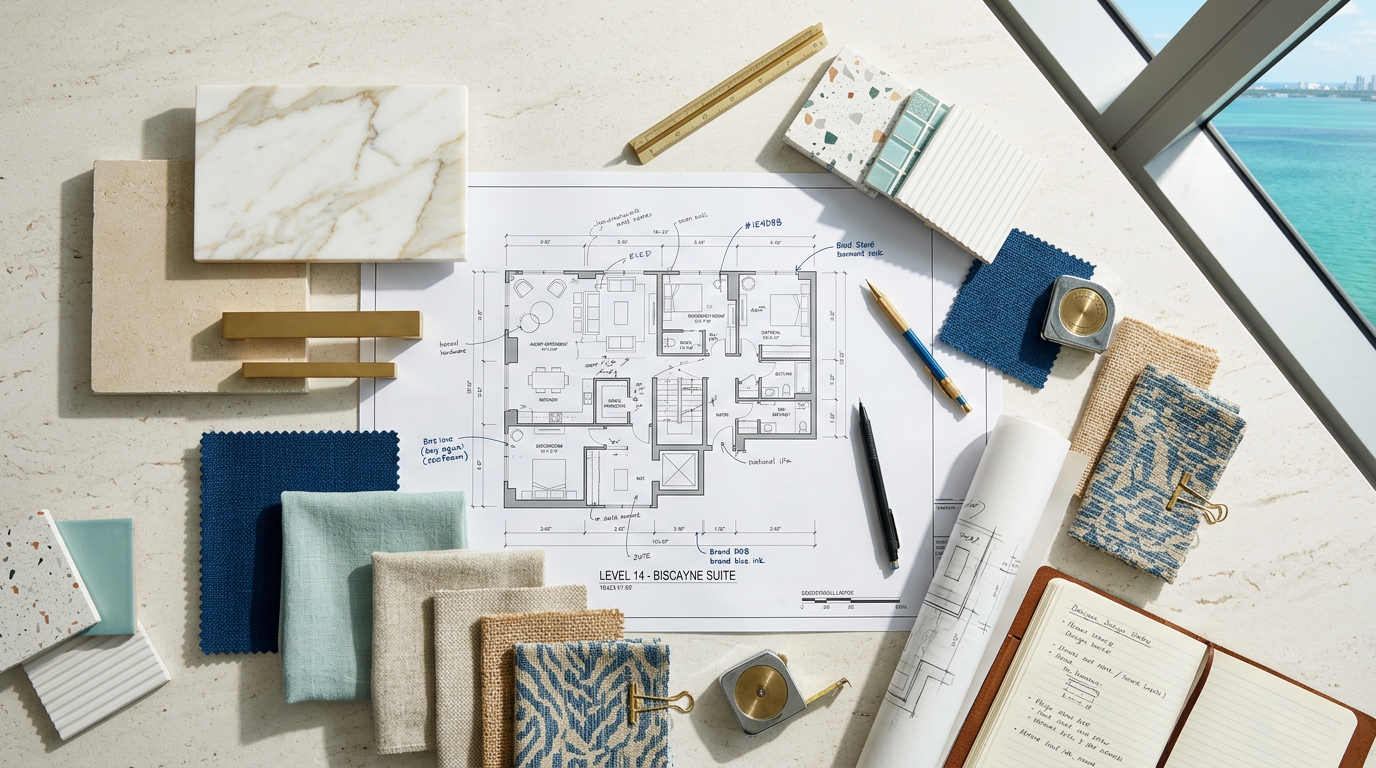
The main ways interior designers charge
Most designers use one of a few fee structures, or a blend of them. Knowing the difference helps you compare proposals and understand what you are actually paying for.
Flat design fee. The designer quotes a single price for the design work based on the scope. You know the number up front, which many clients prefer for budgeting. This works well when the project is well defined.
Hourly rate. You pay for the designer’s time as the project moves. This suits smaller or open-ended projects where the scope is hard to pin down in advance.
Percentage of project cost. The design fee is a percentage of the total spend on the project, including furnishings and construction. As the project grows, the fee scales with it.
Cost-plus. The designer purchases furnishings and materials at trade pricing and adds a defined markup. You benefit from trade access while the designer is compensated for the sourcing and management.
Many luxury firms combine these, for example a flat design fee plus cost-plus on procurement. The U.S. Bureau of Labor Statistics notes that fee arrangements vary widely across the profession, which is why comparing two proposals means comparing structures, not just headline numbers.
What drives the cost up or down
Two Miami projects can differ enormously in price. These are the factors that move the number most.
- Size and scope. A single room costs a fraction of a full residence. Whole-home projects and new construction sit at the top.
- Level of finishes. The gap between good and the finest materials is large, and it compounds across a whole home.
- Custom versus ready-made. Custom millwork, bespoke upholstery, and specialty finishes cost more than off-the-shelf, and they define high-end work.
- Construction involvement. A furnishing-only project costs less than one that includes renovation, moving walls, or coordinating a full build.
- Building logistics. High-rise installation, service elevator scheduling, and association rules add coordination that a ground-level home does not.
The single biggest driver is usually scope. A designer helping you furnish a condo is a very different budget from a designer shaping a new waterfront estate from the studs.
Why Miami sits at the premium end
Miami’s luxury market carries costs that reflect the environment and the inventory. Much of the high-end work happens in waterfront homes and glass towers, where materials must stand up to salt air and intense sun, and where installation is genuinely harder.
Getting a custom sofa or a stone slab to a high floor means coordinating service elevators, loading docks, and building management, which takes time and planning. Coastal-grade materials and performance finishes cost more than their ordinary equivalents, but they are what keep a home looking right in this climate. These realities are part of why Miami pricing runs higher than inland markets, and they are covered in more depth in our approach to Miami waterfront and high-rise homes.
Where the money actually goes
It helps to separate the design fee from the total project cost, because people often confuse the two.
The design fee pays for the expertise: the planning, the drawings, the selections, and the management. On most luxury projects it is a meaningful but minority share of the total. The larger share goes into the home itself, the furnishings, the materials, the millwork, the construction, and the trades who build it. When you see a large total, most of it is the physical home, not the designer’s fee.
This distinction matters because the design fee is what protects the rest of the spend. A well-managed project puts the larger budget to work correctly the first time, which is where the fee earns its keep.
What a realistic Miami budget looks like
Rather than quote misleading flat numbers, it is more useful to think in tiers of ambition, because that is how budgets really scale.
A focused, single-room project with quality furnishings is the entry point. A multi-room or full-condo furnishing project steps up from there. A full residence involving renovation and custom work is higher again. And a new construction estate, designed from the floor plan through the final accessory, sits at the top of the range. Kitchens and baths deserve special mention, since they carry the highest per-square-foot cost in any home and reward careful planning, which is why dedicated kitchen and bath design is often the most consequential line in a Miami budget.
The right way to get your number is a consultation, where a designer can see the home, understand the scope, and build a proposal around your actual goals rather than a generic average.
How to get more value for your budget
Cost and value are not the same thing, and a few habits stretch a Miami budget further.
Bring the designer in early, especially on new construction, where new construction design input before walls are set prevents expensive changes later. Be clear about your real budget from the start, so the plan is built for your number instead of painfully adjusted. Prioritize where it counts, spending on the elements you touch and see every day and easing off where it matters less. And invest in quality where longevity matters, because in this climate cheap finishes often cost more over time when they fail and get replaced.
Get a clear number for your Miami project
The only way to know what your project will cost is a conversation about your home and your goals. After an initial consultation, our team maps the scope, recommends the fee structure that fits, and gives you a clear proposal with no surprises.
Request a consultation or call (954) 462-6400 to get started.
More than 40 years designing for the South Florida coast, with pricing that is transparent from the first conversation.
Frequently Asked Questions
How much does an interior designer cost in Miami?
It depends on the size of your home, the scope, and the finishes you choose. Miami is a premium market, particularly for waterfront and high-rise homes. Rather than a flat price, most luxury projects are quoted as a custom proposal after a consultation, so the number reflects your actual goals.
How do interior designers charge for their work?
Common structures include a flat design fee, an hourly rate, a percentage of total project cost, or cost-plus on furnishings purchased at trade pricing. Many luxury firms blend these, such as a flat fee plus cost-plus procurement. Comparing proposals means comparing structures, not just headline numbers.
What is the difference between the design fee and the total project cost?
The design fee pays for expertise, planning, drawings, selections, and management, and is usually a minority of the total. The larger share goes into the home itself: furnishings, materials, millwork, and construction. A big total is mostly the physical home, not the designer’s fee.
Why is interior design more expensive in Miami?
Miami’s luxury work centers on waterfront homes and high-rise towers, where materials must resist salt air and strong sun, and where installation is harder. Coordinating service elevators and building rules, plus coastal-grade finishes, adds cost that inland markets do not carry.
What factors affect the cost of a Miami interior design project?
The biggest drivers are size and scope, the level of finishes, custom versus ready-made pieces, how much construction is involved, and building logistics like high-rise installation. Scope is usually the largest factor, since furnishing a condo is very different from building a waterfront estate.
Is it cheaper to hire a designer or do it myself?
For a large or complex project, a designer often saves money overall by preventing costly mistakes, sourcing at trade pricing, and managing the work so it is not redone. For a very small project, doing it yourself may cost less up front, though the risk of expensive errors rises without professional guidance.
Do interior designers make money on furniture?
Under a cost-plus structure, yes. The designer buys furnishings and materials at trade pricing and adds a defined markup, which compensates them for sourcing, ordering, and managing delivery and installation. This is disclosed up front, and you gain access to quality and trade pricing you could not reach alone.
How can I reduce the cost of my Miami interior design project?
Bring the designer in early to avoid expensive changes, be honest about your budget from the start, and prioritize spending on the elements you use and see most. Invest in quality where longevity matters, since cheap finishes often fail in the coastal climate and cost more to replace.
How long does a Miami interior design project take, and does that affect cost?
Timelines range from a few months for a single room to a year or more for a full residence or new construction. Longer, more complex projects cost more because they involve more design, coordination, and custom work. After a consultation, our team gives a realistic schedule alongside the budget.