Every specification looks good on the sample board. The question is what it looks like in year four, in a house a hundred yards from the Atlantic, with the west elevation taking direct sun from three in the afternoon and the pool door opening forty times a day.
South Florida is one of the most punishing environments in the country for interior finishes, and it punishes quietly. Nothing fails dramatically. Hinges seize. Brass goes green in the wrong places. A honed marble counter etches into a map of where the family sets down drinks. A silk rug in a sunroom loses a third of its saturation before anyone notices it happening.
This is a practical guide to coastal interior design materials, written from four decades of watching what holds and what does not in homes from Miami through Palm Beach.
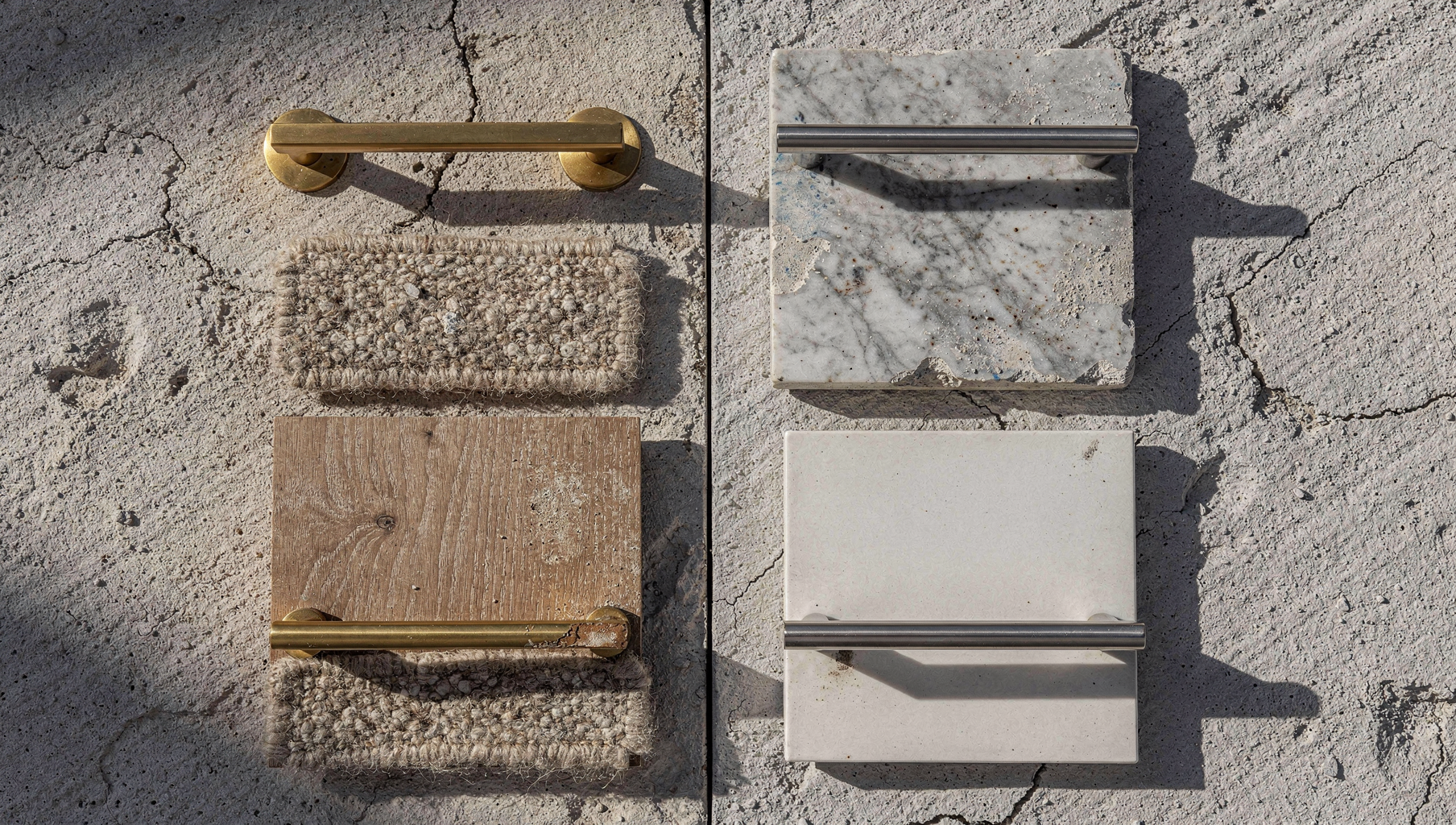
The three forces you are specifying against
Salt
Airborne chloride is the aggressive one. It travels farther inland than most homeowners assume, it concentrates in still air, and it attacks metal first. Proximity matters enormously: an oceanfront property, a property on the Intracoastal, and a property five miles west are three different material environments and should be specified as such.
Humidity
South Florida sits in a hot and humid climate zone where moisture management is a building performance question, not a comfort preference. The U.S. Department of Energy’s guidance on moisture control covers the mechanics. For interiors, the consequence is dimensional: wood moves, adhesives are stressed, and any assembly that was not designed to breathe or to resist moisture will show it at the joints.
Ultraviolet
High-angle sun for most of the year, amplified by reflection off water and pale hardscape. It fades textiles, yellows some finishes, degrades certain plastics, and shifts the color of natural wood faster than clients expect.
Surfaces: what to use and what to skip
Porcelain is the workhorse. Large-format porcelain now convincingly replicates marble, travertine, and concrete, and it is effectively immune to etching, staining, and UV. For floors, pool-adjacent areas, and any counter that will see citrus and wine, it is the highest-performing choice available. The visual compromise has narrowed dramatically over the past several years.
Dense quartzite outperforms marble. If the household wants genuine natural stone, quartzite delivers stone character with substantially better resistance to acid etching than calcite-based marbles. It needs sealing and it is not indestructible, but it holds up.
Marble has a place, with eyes open. A honed marble in a powder room or on a fireplace surround is a reasonable risk. Honed marble on a kitchen island in a house with teenagers is a maintenance commitment, and the client should be told exactly what the patina will look like before approving it.
Engineered quartz has a sun limitation. It performs beautifully indoors. In a sunroom, a covered terrace, or anywhere with sustained direct UV, many engineered quartz products are not rated for it and can discolor. Check the manufacturer’s UV rating before specifying it near glass.
Concrete and terrazzo work here. Both handle humidity well, both take a durable sealer, and terrazzo in particular has a long South Florida pedigree that reads as native rather than imported.
Casework and millwork: the quiet failure point
This is where climate does its most expensive damage, because the failure shows up after the warranty period.
Solid wood cabinet doors built for a dry climate will move here. In a painted finish, that movement telegraphs through the joints as hairline cracking within the first year or two. The answer is not to avoid painted casework, it is to build it correctly: engineered substrates with stable cores, finished on all six faces including the backs and the interior of the box, with edge treatments that seal rather than merely cover.
Veneers should be applied to stable substrates and balanced, meaning a backing veneer on the reverse face so the panel does not cup. This costs more and it is the difference between flat doors and doors that bow.
Interior hardware matters more than it looks like it should. Soft-close hinges and slides in a coastal home should be corrosion-resistant grade, not builder standard, particularly in a kitchen or bath adjacent to an exterior opening.
Toe kicks and cabinet bases near a pool entry or a beach entry should be specified as if they will get wet, because they will.
Metals: the clearest hierarchy in the house
Exposed metal is where proximity to salt matters most, and where the specification should be explicit rather than assumed.
Marine-grade 316 stainless is the standard for anything genuinely exposed, including outdoor kitchens, pool-adjacent hardware, and fittings in oceanfront properties. Standard 304 stainless, common in residential products, will pit in these conditions.
Powder-coated aluminum performs extremely well and offers color flexibility that stainless does not.
Solid brass with a protective lacquer holds up in interior positions. Unlacquered brass is a living finish and it will patina quickly here, which is a legitimate design choice but only when the household has agreed to it in advance.
Plated finishes on base metals are the most common failure. Oil-rubbed bronze and various decorative plated finishes over zinc or pot metal will blister and flake in a coastal bath within a few years.
A useful rule: anything within reach of salt air, pool chemistry, or a regularly opened exterior door should be specified to an exterior standard even though it lives indoors.
Textiles: where the sun does its work
Performance textiles have improved enough that there is rarely a reason to accept fading as inevitable.
Solution-dyed acrylics carry color through the fiber rather than on its surface, which is why they hold saturation under UV where conventionally dyed fabrics do not. They are no longer limited to outdoor aesthetics, and the current generation includes convincing velvets, boucles, and linen-look weaves.
Performance velvets and high-performance blends handle the combination of humidity, sunscreen, and daily use that defines a South Florida living room.
Natural fibers need protection or shade. Silk, undyed linen, and natural wool on a heavily glazed elevation will shift within a couple of seasons. They are appropriate in interior rooms, dining spaces, and bedrooms with controlled light.
Rugs should be considered separately. Indoor-outdoor constructions have improved considerably, and in a house where wet feet, sand, and sunlight all reach the floor, a high-quality indoor-outdoor rug frequently outperforms a natural fiber piece at a fraction of the anxiety.
Window treatment fabric is a UV question first. Anything on a west or south elevation should be rated for it, and a UV-filtering glazing film behind the treatment protects everything else in the room.
Wood flooring, and when to say no
Engineered wood with a stable core performs acceptably in conditioned, interior spaces. Solid wood flooring in a South Florida house is a maintenance decision, particularly in a seasonal home where the interior conditions swing while the house is closed.
The harder question is the seasonal property. A house closed for four months with minimal conditioning will experience humidity cycling that solid wood will not forgive. In those homes, porcelain or a high-quality engineered product is the specification that still looks right when the household returns.
Building the whole schedule to one standard
The mistake that produces most disappointment is inconsistency: a beautifully specified great room and a beach entry detailed like it is in Connecticut. Water, sand, and salt travel through a house along predictable paths, and the specification should get more aggressive along those paths, not less.
Our team has been designing South Florida interiors for more than forty years, and the specification discipline is the part of the work that does not photograph but determines whether the house still looks like the photographs in year five. That discipline shows up most clearly in the rooms that take the hardest use, which you can see in our kitchen and bath design work.
Frequently asked questions
What countertop material is best for a South Florida coastal home?
Large-format porcelain is the highest-performing choice, resisting etching, staining, heat, and UV. Dense quartzite is the best natural stone option. Engineered quartz performs well indoors but should be checked for UV rating before use in sunrooms or covered terraces. Calcite-based marbles etch readily and should be placed where that patina is acceptable.
Does salt air really reach homes that are not on the beach?
Yes. Airborne chloride carries well inland, and properties on the Intracoastal or on canals experience meaningful exposure. The concentration drops with distance, so an oceanfront home, a canal-front home, and an inland home warrant three different levels of specification rather than one blanket approach.
What metal finish lasts longest in a coastal Florida home?
Marine-grade 316 stainless and powder-coated aluminum lead for exposed positions. Solid lacquered brass performs well in interior locations. Plated decorative finishes over base metals are the most likely to blister or flake in a coastal bath within a few years.
Why do my cabinet doors have hairline cracks at the joints?
That is almost always seasonal wood movement telegraphing through a painted finish on solid stock built without accounting for this climate. The preventive answer is engineered substrates with stable cores, sealed on all six faces, with balanced veneers where veneer is used.
Are performance fabrics still limited to outdoor styling?
No. Solution-dyed acrylics and high-performance blends are now available in velvets, boucles, chenilles, and linen-look weaves that are difficult to distinguish from conventional goods by hand or eye. In a coastal house they are the default rather than the compromise.
Can I use hardwood floors in a South Florida house?
Engineered wood with a stable core performs acceptably in conditioned interior spaces. Solid hardwood carries more risk, especially in seasonal homes where interior humidity cycles while the house is closed. Porcelain that reads as wood is a durable alternative that has improved substantially.
How do I keep colors from fading on a sunny elevation?
Three layers. Specify solution-dyed and UV-rated textiles, apply a UV-filtering glazing film or select glazing with a low visible transmittance where appropriate, and plan window treatments that can actually be closed during peak hours without making the room unusable.
What should I do differently in a home that sits empty part of the year?
Manage humidity during the closed period, favor materials that tolerate interior condition swings, protect textiles from standing sunlight, and build a documented closing and opening routine. A seasonal home should be specified as a seasonal home from the first material selection, not adapted afterward.
Is engineered quartz a good choice near a pool?
Generally no in direct sun. Many engineered quartz products are not UV rated and can discolor with sustained exposure. Porcelain and appropriate natural stone are the better choices in covered terraces, pool decks, and sunrooms.
How often should coastal interiors be maintained?
Hardware and metal finishes benefit from regular cleaning to remove salt deposits before they act. Natural stone needs sealing on the manufacturer’s schedule. Textiles in high-sun positions should be evaluated annually. A short written maintenance plan handed over at project close is worth more than any single material upgrade.
Does specifying for durability mean giving up the look I want?
Not anymore. The performance materials available in 2026 do not require an aesthetic compromise the way they did a decade ago. The real constraint is knowing which product performs in which position, and specifying accordingly rather than uniformly.
Want a specification built for your property?
Shuster Design Studio has spent more than forty years specifying South Florida interiors, from oceanfront estates to high-rise residences, and the material decisions are made against the actual exposure of the actual house.
Call the studio or reach out through the contact form on our website to schedule a consultation.